
1
A conversation before anything else.
The muscles that support your bladder, bowel and reproductive organs. Many people think the answer is strengthening. Very often the problem is tension and poor coordination, not weakness.
What It Is
Your pelvic floor supports your bladder, bowel and reproductive organs, and it has to do two opposite jobs well: hold when there is pressure, and relax completely when there should not be. Most problems here are a failure of one of those two, not a failure of strength.
This is the correction we make most often. People arrive having been told to do more Kegels, when the actual problem is a floor that cannot let go. Strengthening a muscle that is already gripping makes it worse, which is why the evaluation comes first and the exercises come after.
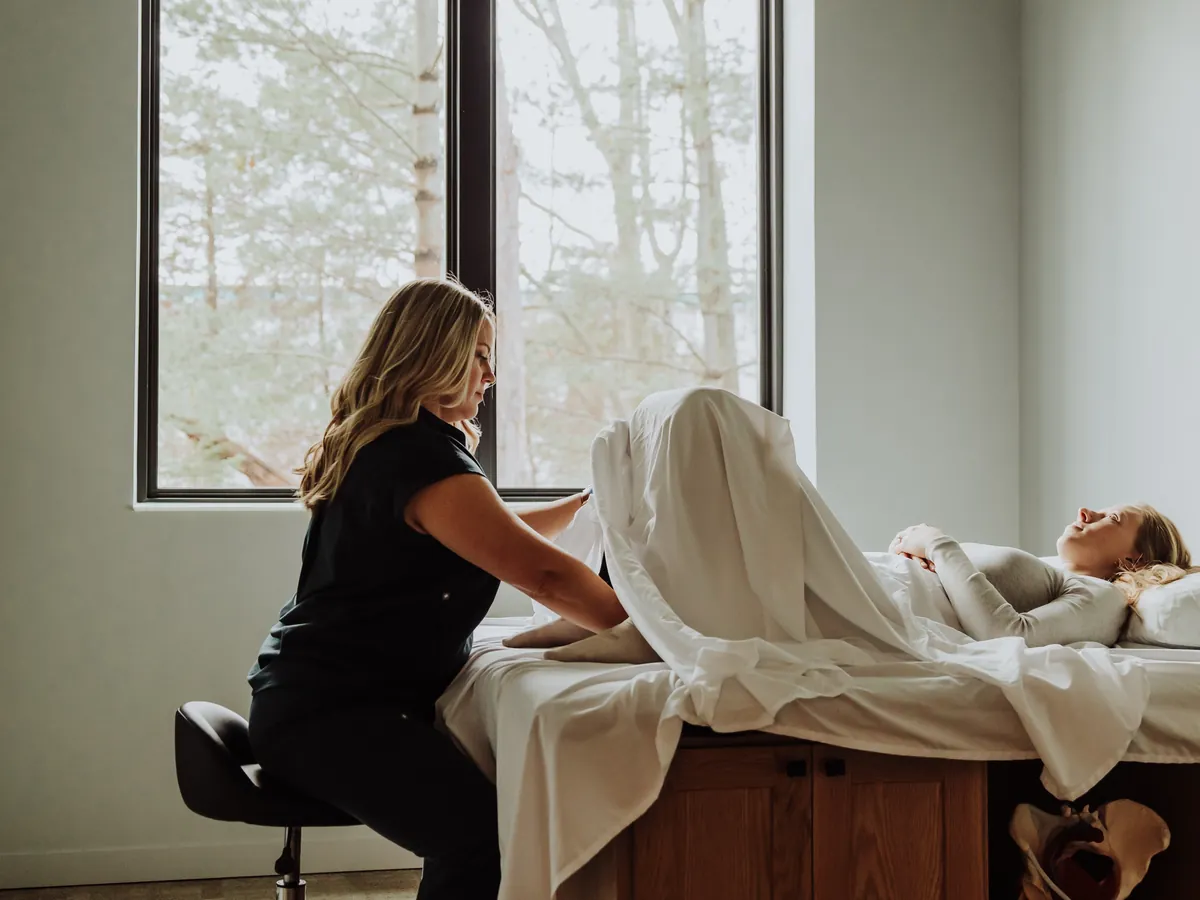
Everything happens in a private room, one-on-one, at your pace. Internal work is offered because some of these muscles are only reachable that way, and it is always optional and always consented to.
What It Helps
Leaking, pressure, pain and postpartum recovery are all treatable, and none of them are things you simply live with.
What A Session Looks Like
1
A conversation before anything else.
2
An evaluation you control the pace of.
3
A plan built for your symptoms, not a template.
Why It Works
Waiting rarely makes this smaller. It usually just makes the list of things you have quietly stopped doing a little longer.
Tension treated before strength.
A private room, one-on-one, always.
Internal work optional and consented.
Men treated here too, by a certified therapist.
Pairs Well With
Questions, Answered
A conversation first, then an evaluation of how you move, breathe and load the pelvic floor. We explain every step before it happens. Internal assessment is offered because it gives the clearest picture, and it is entirely your choice. Plenty of people decline it and still get better.
Yes. Dr. Marissa Zolton is certified to treat male pelvic floor conditions, which is genuinely difficult to find in West Michigan. Male pelvic pain and dysfunction are common, under-diagnosed and very treatable.
Simple postpartum recovery often improves in 6 to 8 weeks. Chronic pelvic pain and more complex cases typically need 10 to 16 weeks. Most people start at one to two visits a week, and you get a realistic timeline at your first visit.
Book Your Visit
Request a time and a real person calls you back, usually within two business hours. No phone tree. No ‘someone will reach out.’ Just a plan.
5.0 · 150+ Google reviews
Typical response: under 2 business hours
Step 1 of 5
That’s the hard part done. We’ll call during business hours to lock in your time.
Visit Us