
1
We assess how you are actually organized.
Your body works as one system, so we treat it as one. Our signature approach brings orthopedic care, pelvic health, breathing and movement into a single plan built around how you are actually organized.
What It Is
The Ruther Method is the approach Dr. Kelly Ruther built over nine years of treating both orthopedic and pelvic health patients. It starts from a simple fact: the human body is asymmetrical by design. You have a liver on one side and a heart on the other, and a diaphragm that is shaped differently left to right. Your body compensates for that every day, and over years those compensations become the pattern you live in.
That pattern is why pain moves around, why one side always tightens first, and why treating the sore spot keeps failing. We look at how you are organized as a whole, including how you breathe, because breathing drives rib position, and rib position drives almost everything above and below it.
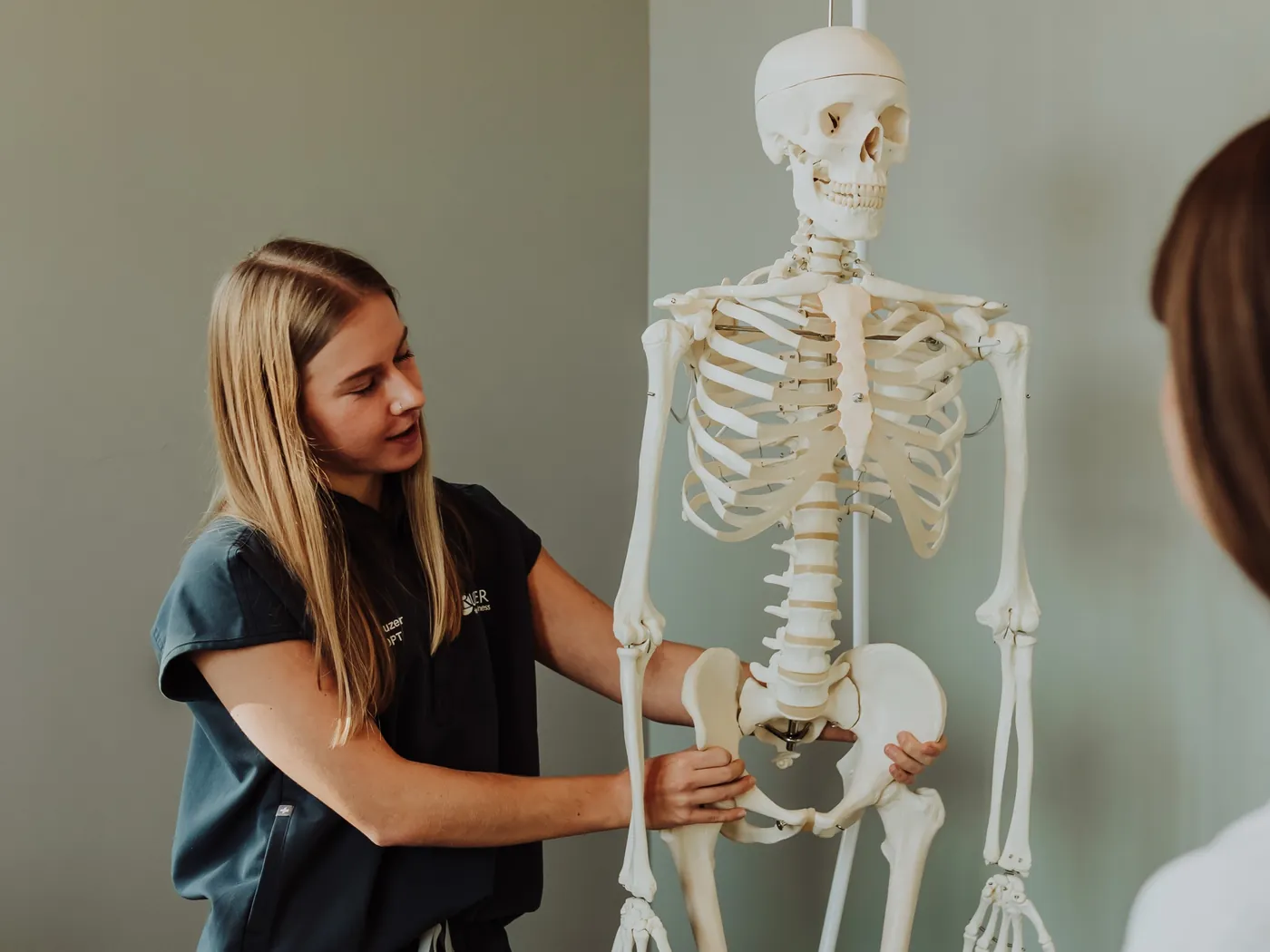
Most clinics split you into parts: one provider for your back, another for your pelvic floor. The Ruther Method looks at all of it together, drawing on post-graduate training in orthopedics, pelvic floor, posture and breathing mechanics, and functional movement. It is the most different thing we do, and it is often the answer for people who have been everywhere else.
What It Helps
Especially for the pain that keeps moving, and the side that always tightens first.
What A Session Looks Like
1
We assess how you are actually organized.
2
Breathing and position come before exercise.
3
You leave with a pattern you can repeat.
Why It Works
Compensation patterns get more established the longer they run, which is why pain that moves around gets harder to chase.
Whole body, not one sore part.
Breathing mechanics addressed directly.
Explains pain that keeps moving.
Ortho and pelvic health in one plan.
Pairs Well With
Questions, Answered
Traditional therapy usually isolates the painful area. This looks at whole-body position and asymmetry, including how you breathe, and treats the pattern rather than the symptom. It is often what finally works for people whose pain keeps relocating.
Very. Athletes tend to have the strongest compensations, because they have reinforced the same pattern thousands of times. Correcting the asymmetry usually shows up as better movement and fewer recurring injuries, not just less pain.
Most people notice a change within a few sessions, often in how easily they breathe or how one side feels. Lasting change depends on repeating the new pattern, which is why the home work matters more here than almost anywhere else.
No. The Ruther Method uses some of the same ideas about asymmetry and breathing, but it is not a Postural Restoration Institute (PRI) program. It is our own whole-body approach, combining orthopedic, pelvic floor, posture and movement training into one plan, delivered in 60-minute one-on-one sessions.
Book Your Visit
Request a time and a real person calls you back, usually within two business hours. No phone tree. No ‘someone will reach out.’ Just a plan.
5.0 · 150+ Google reviews
Typical response: under 2 business hours
Step 1 of 5
That’s the hard part done. We’ll call during business hours to lock in your time.
Visit Us